FakeBeforeAfter FakeBeforeAfter
Aesthetic Skincare Fitness Weight loss Hair Submit
Submit

Aesthetic procedures

Visual analysis of misleading before–after images in aesthetic medicine.

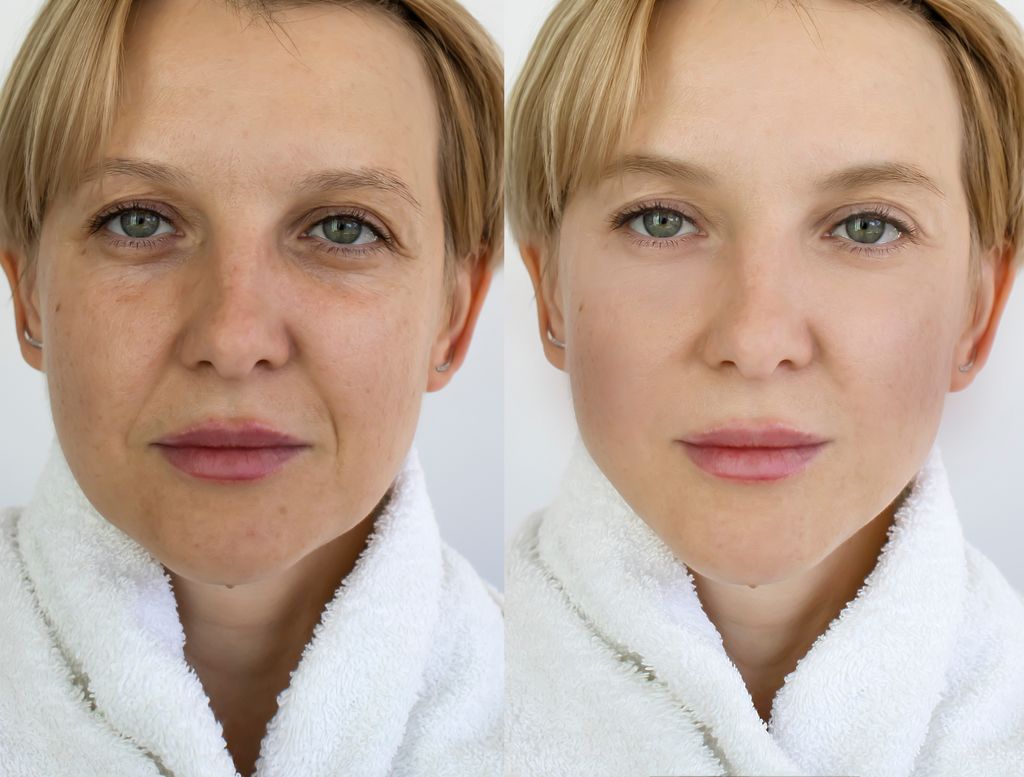
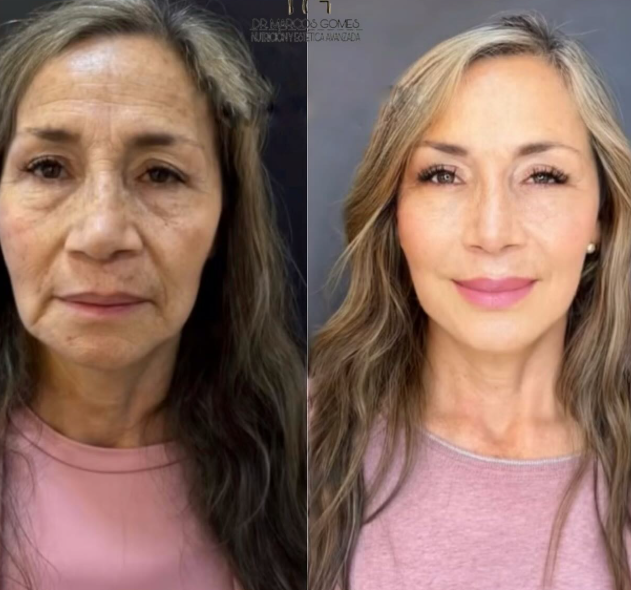
Facial harmonization to look younger, aesthetic treatments ↗

Facial harmonization to look younger, aesthetic treatments

Lighting · Pose / angle · Hairstyle · Makeup · Photoshop

Three things happening here. First, the lighting is completely different — the "before" uses harsh, cool light from the side that emphasizes every shadow and texture, while the "after" uses warm, soft front lighting that instantly smooths everything. Second, the angle has shifted — her head is tilted slightly differently, which changes how her jawline and cheeks appear. Third, and most obvious: makeup and hairstyle. Light photo editing performed too.

HIFU Treatment ↗

HIFU Treatment

Photoshop · Same photo

This is the exact same photo processed with skin smoothing. Hair strands, eye reflections, and shadows are identical — only the texture and pigmentation were blurred. And it’s being presented as HIFU results, which is even more misleading. HIFU cannot erase sun damage, pores, and skin texture like a Photoshop filter.

via Reddit
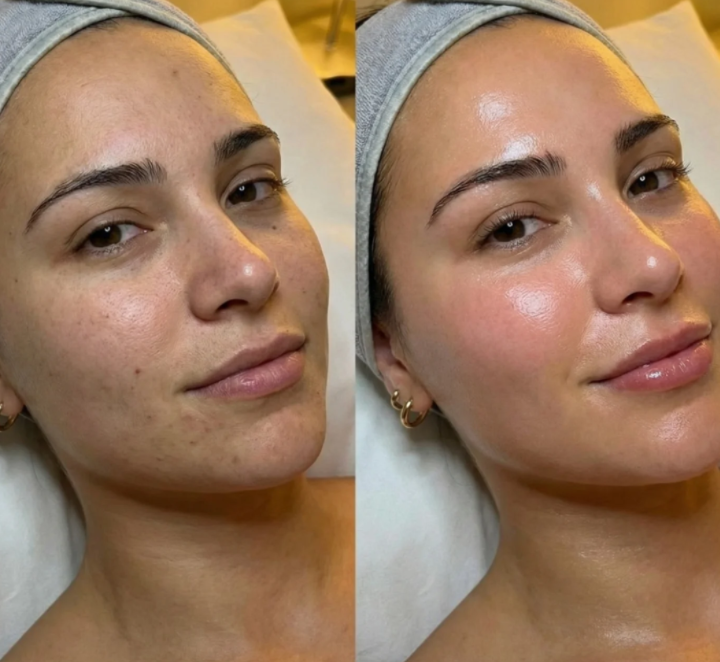
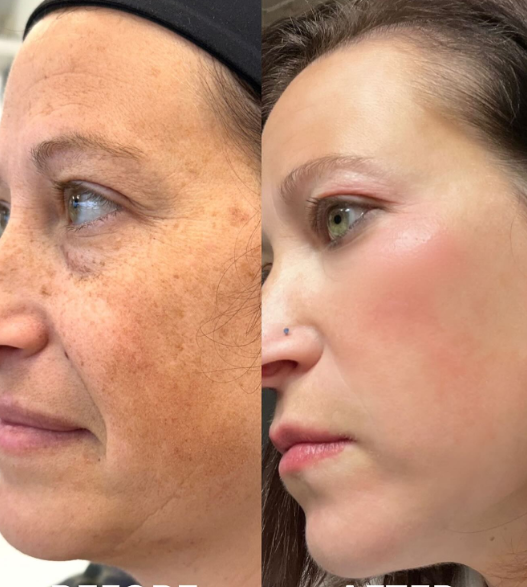
Improved skin texture and glow after a Hydrafacial treatment. ↗

Improved skin texture and glow after a Hydrafacial treatment.

Photoshop · Same photo

Look at the nose and eyes — the lighting and shadows are identical in both photos, even the neck shadow is unchanged. It’s the same image processed with a smoothing filter rather than a true before/after. The texture, pores, and small blemishes just disappear uniformly. Real treatments don’t work like Photoshop — if Hydrafacials erased pores, acne and hyperpigmentation this perfectly, dermatologists would be out of business.

Full Face Sculptra results — collagen stimulation for facial rejuvenation, lifting, and volume restoration. ↗

Full Face Sculptra results — collagen stimulation for facial rejuvenation, lifting, and volume restoration.

Lighting · Pose / angle · Photoshop

Several non-treatment tricks are doing most of the work here: the camera angle changes, the lighting goes from harsh overhead to soft frontal, and the color balance is warmer and more flattering. These alone can make a face look smoother and more lifted .Sculptra stimulates collagen over time, but it doesn’t erase pores or turn skin into Photoshop.

Four-month facial harmonization result using: two CO2 laser sessions,  injectables ↗

Four-month facial harmonization result using: two CO2 laser sessions, injectables

Lighting · Pose / angle · Photoshop

Harsh overhead lighting in the “before” exaggerates shadows and texture, while soft frontal lighting in the “after” smooths the face instantly. The head angle is different, changing how the jawline, cheeks, and neck appear. On top of that, the “after” is clearly airbrushed: pores and natural skin texture are erased—results far beyond what CO₂ laser sessions and injectables can produce in four months.

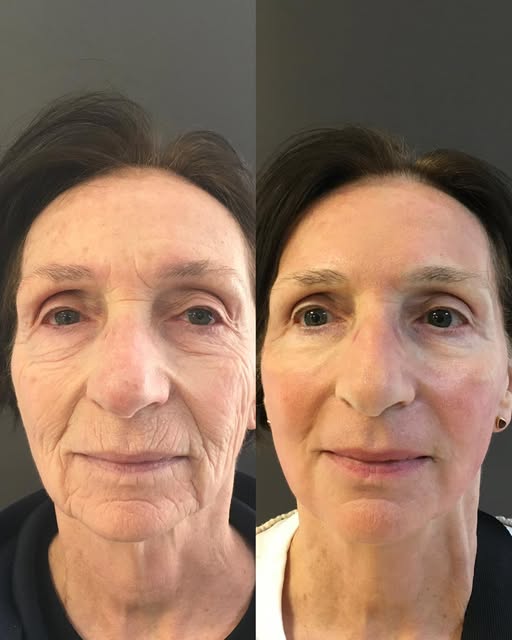
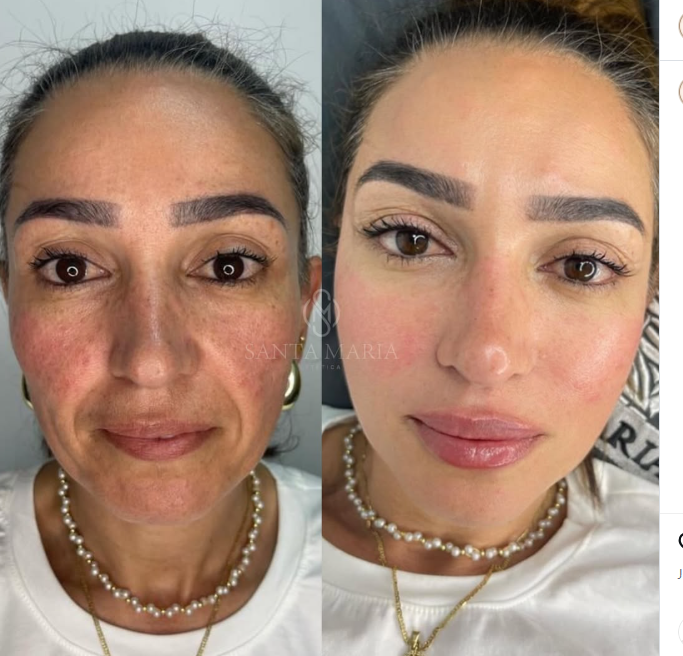
The Power of the Peel. Results from a 3-Step Peel and ZO Regimen, 2 months apart. ↗

The Power of the Peel. Results from a 3-Step Peel and ZO Regimen, 2 months apart.

Lighting · Pose / angle · Photoshop

Marketing fantasy, not medical outcome. The “after” shows unnaturally uniform skin with pores and fine lines and wrinkles erased rather than merely softened. The under-eye appears smoothed and tightened even though peels are not performed there. Sun-damaged skin cannot be completely corrected with peels. Photoshop helps.

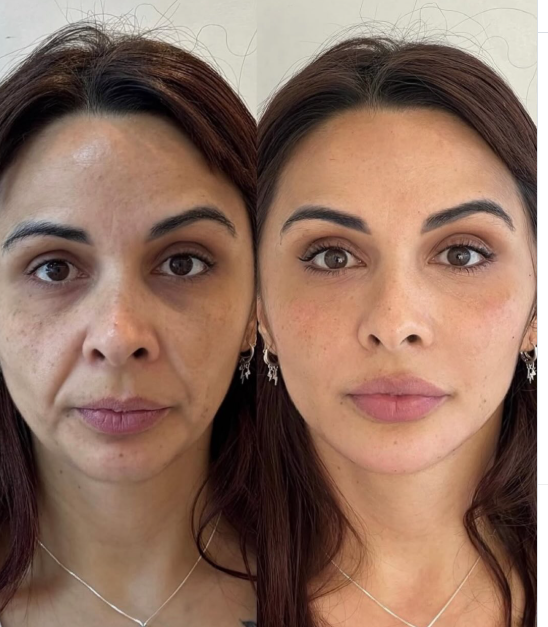
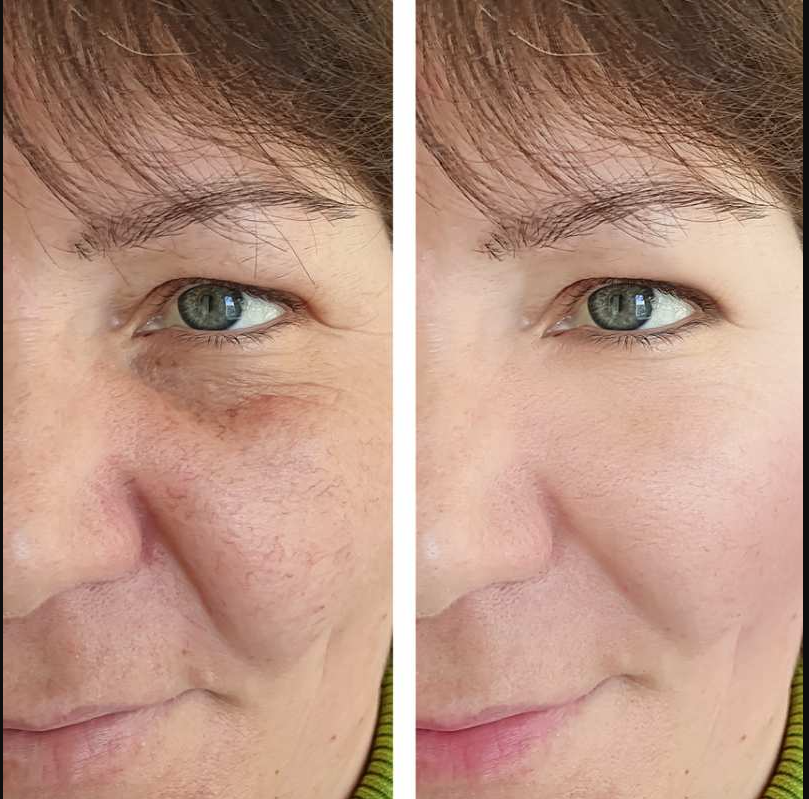
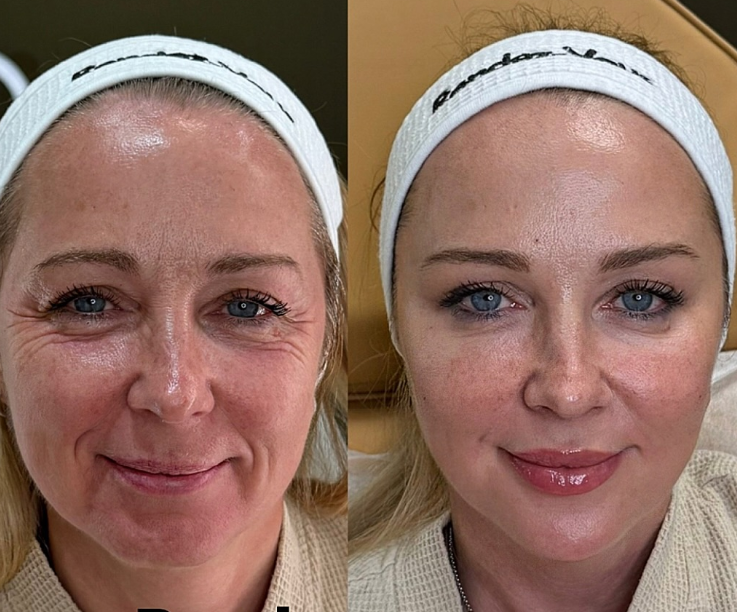
Botox, fillers, skin boosters - 1 session ↗

Botox, fillers, skin boosters - 1 session

Lighting · Pose / angle · Photoshop

This before/after is misleading about what one session of Botox, fillers, and skinboosters can realistically achieve. The 'before' shows stronger muscle engagement (more pronounced crow's feet and nasolabial folds), while the 'after' is visibly more relaxed. Much of the apparent transformation — going from roughly 45–50 to looking 30 — comes from presentation choices rather than injectables alone: softer, more frontal lighting (even the eye color appears lighter), added makeup, and what looks like serum applied to the skin to create a dewy finish. These factors significantly reduce the appearance of shadows, texture, and fine lines. The treatments likely produced real results, but the photography and styling are doing a lot of the heavy lifting here.

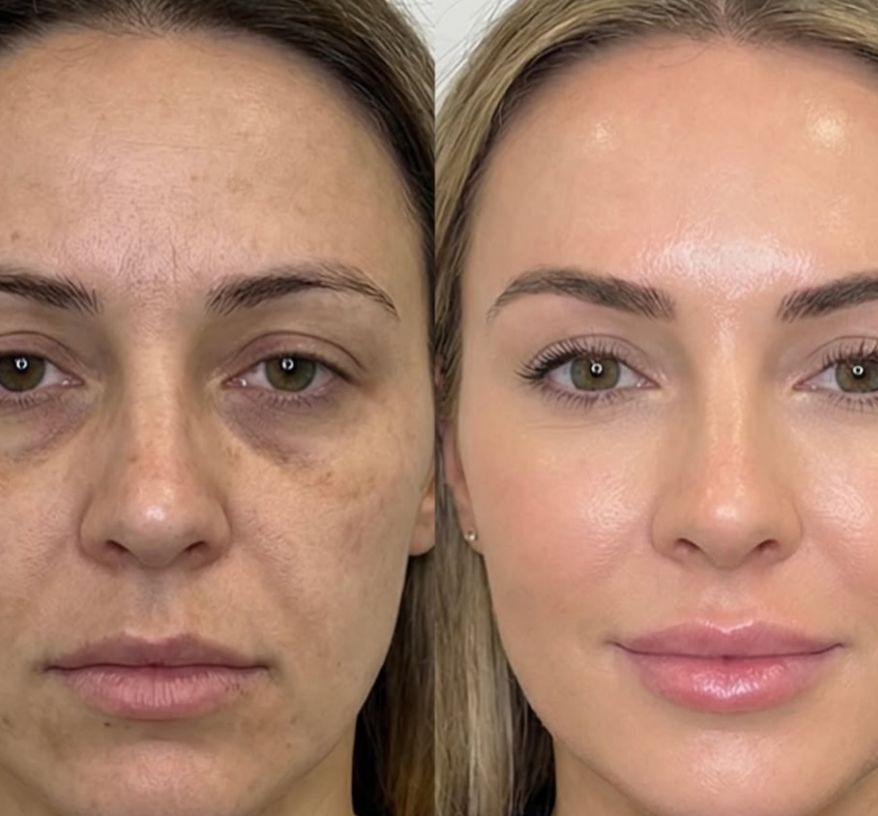
Full Total Skin Solutions series combining RF Microneedling, Ultra Skin Rejuvenation, and customized spa facials. ↗

Full Total Skin Solutions series combining RF Microneedling, Ultra Skin Rejuvenation, and customized spa facials.

Lighting · Pose / angle · Photoshop

The before is artificially degraded, the after is heavily retouched: skin smoothing, color and lighting correction, and makeup added in the ‘after.’ This is digital retouching, not a real before/after. Same photo — identical eye reflections. Photoshop has better skin care results than any treatment.

Six PRP Microneedling treatments ↗

Six PRP Microneedling treatments

Lighting · Photoshop

The texture mismatch is telling: the ‘before’ appears artificially degraded, while the ‘after’ shows auto-smoothing typical of retouching. The same photo appears to be used (note the identical eye reflections). PRP microneedling improves skin quality gradually; it does not produce pore-free, uniformly smooth skin. This is misleading.

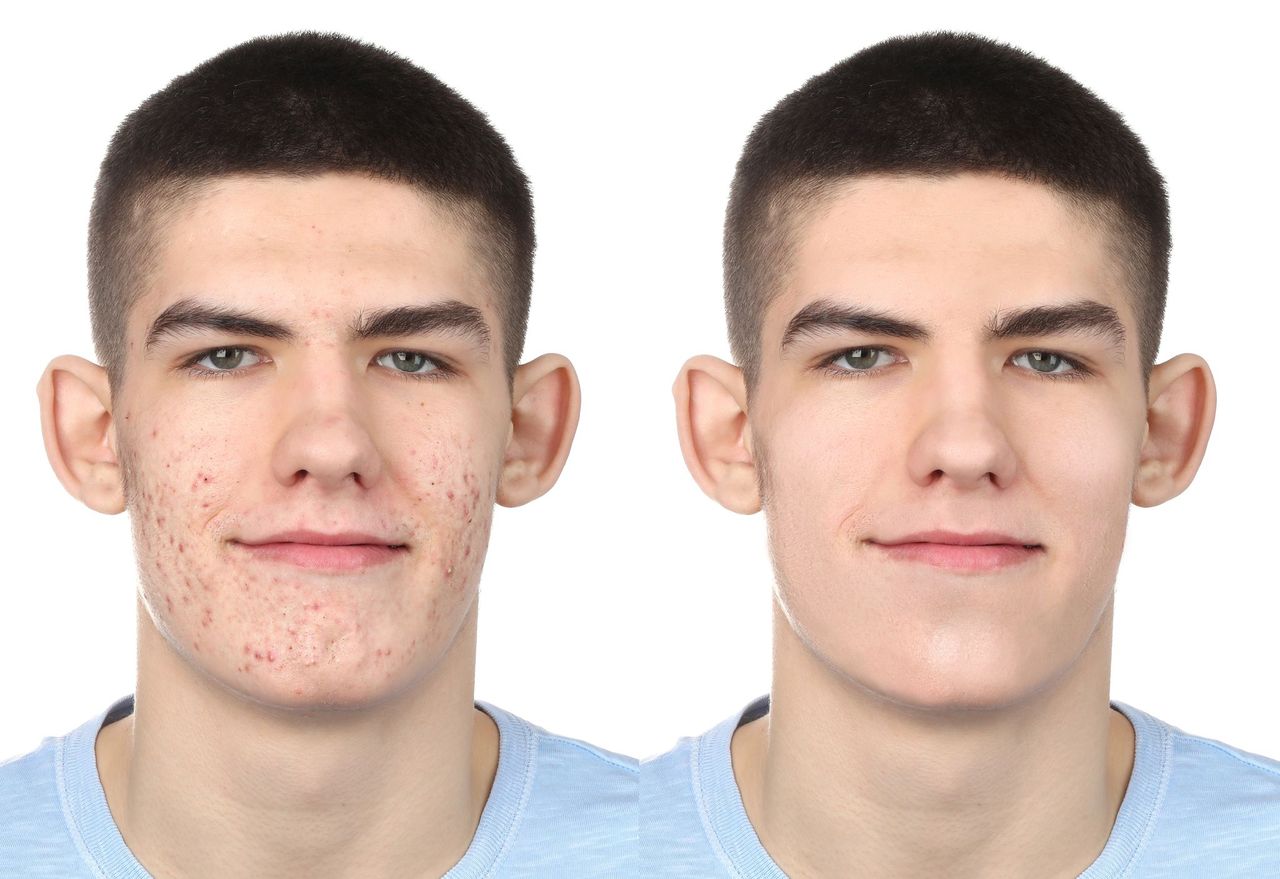
Before and after 4 sessions of Skin Needling — amazing results... ↗

Before and after 4 sessions of Skin Needling — amazing results...

Lighting · Pose / angle · Photoshop

This is misleading. Microneedling does not resolve active acne lesions, and post-inflammatory hyperpigmentation does not fade this uniformly in a short timeframe. The ‘after’ also uses softer lighting and surface shine that reduce visible texture and contrast

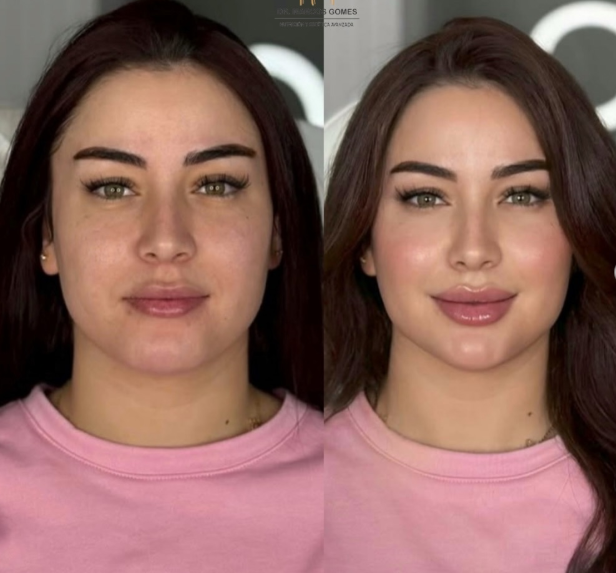
6 weeks after procedure — filler plus Botox ↗

6 weeks after procedure — filler plus Botox

Lighting · Pose / angle · Photoshop

This goes way beyond what Botox and fillers can do. Facial slimming, nose reshaping (even the bridge), uniform pore reduction, and what looks like changed bone structure point to lighting, styling, a better shooting angle, and digital retouching rather than injectables alone. Injectables don’t rewrite facial anatomy.

Skin rejuvenation with Phenol-Croton Oil Peel ↗

Skin rejuvenation with Phenol-Croton Oil Peel

Lighting · Photoshop · Other

The ‘after’ image reflects post-procedure edema (swelling), which temporarily stretches the skin and makes scars appear flatter. Softer lighting and surface shine further mask texture. Post-acne scars are structural dermal defects. Phenol-croton peels can smooth the surface, but they do not regenerate lost dermis and cannot erase atrophic acne scars and deep wrinkles. Nasolabial folds and under-eye skin improve despite not being treated — changes that point to digital retouching, not peel effects.

Page 1 of 2 Next →

Frequently asked questions

The most common methods include changing lighting between shots, adjusting the camera angle to flatter facial contours, altering facial expression or head tilt, and applying makeup or skin prep differently. Some clinics also photograph patients immediately after a procedure when temporary swelling creates a fuller, smoother look that fades within days.

Yes. Injectable results are heavily influenced by how photos are taken. A slight change in head angle can make jawline filler look far more dramatic. Lighting from below versus above completely changes how forehead lines appear. Clinics sometimes photograph the "before" under clinical fluorescent lighting and the "after" with professional portrait lighting, which flatters the result regardless of the actual treatment outcome.

Photos compress three-dimensional features into a flat image, which hides asymmetry and simplifies depth. A result that looks perfect in a front-facing photo may appear very different from the side or in motion. Cameras also capture a single moment in time, so temporary post-procedure swelling or redness may be mistaken for the final result.

Reliable photos use a fixed camera position, identical lighting, the same facial expression, no makeup, and a clear timeline stating how long after the procedure the photo was taken. Medical studies use standardized photography setups. If a clinic only shows heavily styled or filtered images, the actual results may be less impressive.

Not always. Laser treatment results depend on skin type, healing time, and environmental conditions. Photos taken immediately after treatment may show redness or swelling that temporarily plumps the skin. Changes in camera white balance can also make skin tone appear more even than it really is. Look for photos taken at least several weeks post-treatment under consistent conditions.
FakeBeforeAfter

Independent visual education project about misleading before-and-after images in aesthetic medicine. Powered by iGlowly.

Submit a photo Disclaimer DMCA & Takedown
© 2026 fakebeforeafter.com. All rights reserved. This site uses no cookies and does not track you.